By James Brown, Education and Public Engagement Officer, Biochemical Society
We are pleased to announce the winners of our Science Communication Competition. Now in its sixth year, the competition attracted 81 entries which were reviewed by our panel of expert judges.
By Cassandra Terry, Jessica Sells, Elizabeth Sawyer & Claire Sarell from University College London
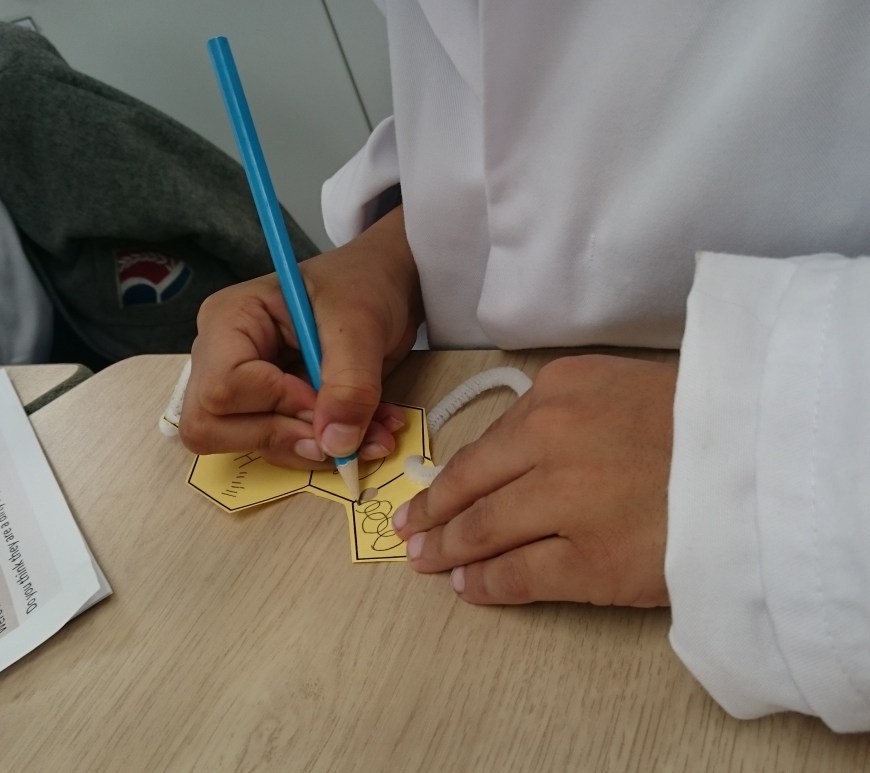
To coincide with the 2016 Olympics still being fresh in many children’s memories, we designed an activity called ‘Dirty Dopers, cheating or competing?’ which focused on the biochemistry behind performance enhancing drugs in sport.
By James Brown, Education and Public Engagement Officer, Biochemical Society
The dominating spectacle of dinosaurs and dodos seemed to spark the imagination of guests at the British Society for Gene and Cell Therapy’s annual Public Engagement Day, this year held at the Museum of Natural History in Oxford.
Biochemical Society members Evita Hartmane, Heba Ismail and James Tomkins joined me for the first outing of our new public engagement activity: Scientific Scissors. The activity is all about Genome Editing – What is it? How does it work? What can we do with it? What should we do with it? Why is it important? The aim is to start conversations about new technologies and give people the opportunity to ask questions whilst engaging with the ethical issues involved.
Currently, there is much interest in the ageing brain and how people can take measures to counteract the decline in mental function that appears to be an inevitable consequence of growing older. The World Health Organization predicts that between 2015 and 2050, the proportion of the world’s population aged over 60 will nearly double, from 12% to 22%. So more people are living for longer, meaning that age-related disease and disability is a major and escalating concern for society.
The term ‘cognitive decline’ is often used to describe the deterioration in some aspects of brain function that occurs with age. Dementia is used to define a decline in mental ability that is severe enough to interfere with daily life. It is characterized by memory loss and by difficulties with thinking, problem-solving or communicating. There are several causes of dementia, with Alzheimer’s disease being the most common type, followed by vascular dementia. Continue reading “Counteracting cognitive decline & dementia”



 The dominating spectacle of dinosaurs and dodos seemed to spark the imagination of guests at the



 ARCHIVE