



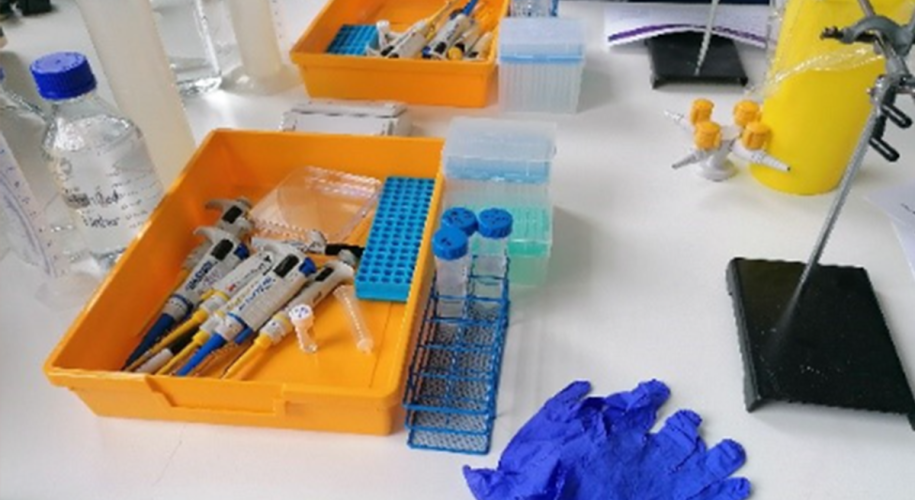

I bet you didn’t know… cutting-edge research can inspire primary school children
I was interested to read a recent blog by Dr Mark Roberts – Why should scientists be engaging the public? It is great to hear that the Biochemical Society is supporting scientists who want to engage the public with their science. However, primary school children and their teachers are rarely considered in any engagement or dissemination strategy. There are several possible reasons: it is often … Continue reading I bet you didn’t know… cutting-edge research can inspire primary school children


Why should scientists be engaging the public?
By Mark Roberts There was a time where scientific debate only happened in the letter pages of national newspapers. However, as research developed and became more specialised, scientific discourse moved into journals found only in institutional libraries, creating barriers between those undertaking the science and the wider public. More recently, the discourse has moved to a two-way dialogue with the public; engagement rather than outreach. … Continue reading Why should scientists be engaging the public?

Systems Biology: Leveraging Biological Complexity and Computational Power
When studying how a bicycle works, we can break it down into its composite parts (e.g. the gears, brakes and wheels) and study each part in isolation. But although we would become experts on the parts, the gears, brakes, or wheels, we would still need to integrate knowledge across these parts to understand how the whole bicycle system works, or how a change in one part of this system would affect other parts. This rationale can be applied similarly to the study of disease mechanisms. Continue reading Systems Biology: Leveraging Biological Complexity and Computational Power

SARS-CoV 2: eXplaining the differences in death rates
As the SARS-CoV-2, or more commonly known as Covid-19, pandemic continues to spread, epidemiologists seem to be churning out some mindboggling numbers. Recently, I came across a puzzling statistic which concluded that women were less likely to die from contracting Covid-19 than men were. Additionally, this was in the above 65 years category, where there is a higher percentage of women than men. Delving into the literature, looking for an explanation to make sense of the difference in death rate, I found an extremely neat explanation relating to X chromosome inactivation. Continue reading SARS-CoV 2: eXplaining the differences in death rates
 ARCHIVE