




Why I think that the proposal to remove publication portability from REF2021 should be scrapped
By Charlotte Dodson, Research Fellow at Imperial College London

“Do we know what’s happening about REF yet?” asked one of the participants at the departmental Principal Investigator (PI) meeting last term. There was a gentle shaking of heads around the table and we moved on. Shortly afterwards I knew the answer: the Stern Review (a UK Government-commissioned independent review into how Research Excellence Framework (REF) 2014 should be improved for next time) made its recommendations. There is now a consultation by HEFCE and its equivalents in Scotland, Wales and Northern Ireland on how best to implement these in REF 2021. Continue reading “Why I think that the proposal to remove publication portability from REF2021 should be scrapped”
Share this:


Career returning – getting to the root of it
By Helen Thompson, Daphne Jackson Fellow, Durham University
 A friend and ex-lab mate has just started volunteering in a lab to update her CV and commented to me “it’s like coming home isn’t it?”, I couldn’t agree more. With my borrowed lab coat on, agar media bottle rattling on the plate in the microwave while it melts and the hum of the flow hood in the background, after 12 years away from the lab it really does feel like a homecoming. I’m very grateful for my former career, as a secondary school teacher which provided me with a stable income and let me raise my son but it just wasn’t the bee’s knees for me. So now that my son towers above me the Biochemical Society and Daphne Jackson Trust have sponsored me to return to plant biology research at Durham University Department of Biosciences working in Professor Keith Lindsey’s group. Continue reading “Career returning – getting to the root of it”
Share this:

Investigating zebrafish with in2scienceUK
By Benjamin Simpson, Shenfield High School, Essex, UK
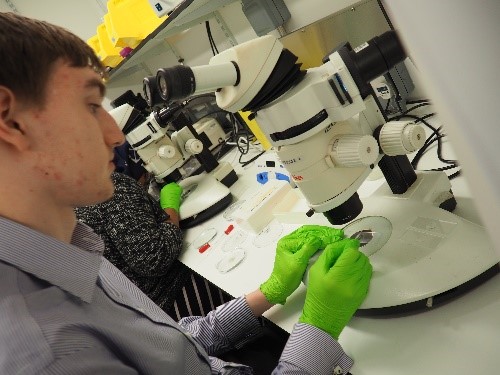
 When I arrived at the lab, the first thing I noticed was how casual everything was. Even the principal investigator arrived at about 11am. I expected to find a strict regime of when to arrive, what to do and what to wear. Anna and Nikki were my supervisors in the Attwell lab at University College London. My project involved using zebrafish to investigate the development of myelin (a substance which is wrapped around neurons to increase conductivity). Zebrafish are especially useful because they are transparent allowing us to view the development under a microscope without harming the fish or embryo. On the first day of my placement they were only a few hours post fertilisation and so were still just a bundle of cells on a yolk. I learnt how to maintain the embryos through filtering out the dead ones and changing the water. Continue reading “Investigating zebrafish with in2scienceUK”
Share this:

New approaches to the antibiotic resistance problem
By Derry K Mercer, Principal Scientist at Novabiotics Ltd & member of the Biochemical Society Policy Advisory Panel

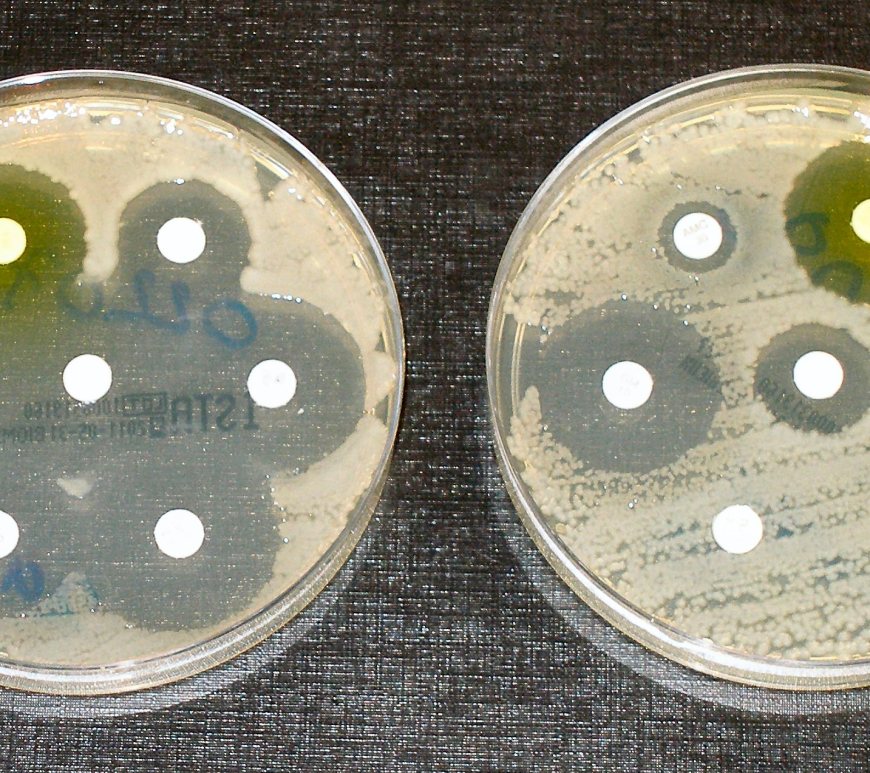
From cradle to grave, antimicrobials have become pivotal in safeguarding the overall health of human societies. According to the World Health Organization (WHO), antimicrobial resistance (AMR) is one of the biggest threats to global health today. Recently, at the United Nations, World Heads of State committed to taking a broad, coordinated approach to address the root causes of AMR across multiple sectors, especially human health, animal health and agriculture, only the fourth time that a health issue has been taken up by the UN General Assembly. According to the O’Neill report, it is estimated that 700,000 people die annually from drug resistant infections. In the US alone, more than two million infections a year are caused by bacteria resistant to at least one antibiotic, costing the US health system more than US$20 billion in excess costs annually. Continue reading “New approaches to the antibiotic resistance problem”

 ARCHIVE