




Building our Industrial Strategy: Investing in science, research and innovation
By Dr Kelly Davidge, Research and Development Manager at Kirkstall Ltd

In the Government’s recently published Green Paper on building the UK’s industrial strategy, they recognise the importance of investment in science, research and innovation and have committed to a number of strategies to boost the UK innovation economy. Although the UK has three of the top 10 and 12 of the top 100 world universities, we lag behind other countries when it comes to investment in innovation through research and development (R&D):
- 1.7% of UK GDP- gross domestic product- is invested in R&D funding, compared with the OECD (Organisation for Economic Co-operation and Development) average of 2.4%;
- business investment in R&D is 1% in the UK, but 2% in Germany, 2.5% in Japan and over 3% in South Korea;
- the UK produces a similar number of spin-off companies to the US but registers fewer patents;
- none of our universities feature in the top 10 of Reuters Top 100: The World’s Most Innovative Universities – 2016, a list that ranks the educational institutions doing the most to advance science, invent new technologies and drive the global economy.
Continue reading “Building our Industrial Strategy: Investing in science, research and innovation”
Share this:


Counteracting cognitive decline & dementia
By Aideen Sullivan, University College Cork

Currently, there is much interest in the ageing brain and how people can take measures to counteract the decline in mental function that appears to be an inevitable consequence of growing older. The World Health Organization predicts that between 2015 and 2050, the proportion of the world’s population aged over 60 will nearly double, from 12% to 22%. So more people are living for longer, meaning that age-related disease and disability is a major and escalating concern for society.
The term ‘cognitive decline’ is often used to describe the deterioration in some aspects of brain function that occurs with age. Dementia is used to define a decline in mental ability that is severe enough to interfere with daily life. It is characterized by memory loss and by difficulties with thinking, problem-solving or communicating. There are several causes of dementia, with Alzheimer’s disease being the most common type, followed by vascular dementia. Continue reading “Counteracting cognitive decline & dementia”
Share this:

Getting connected with our brain
By Dr Shane Hegarty, University College Cork, Ireland

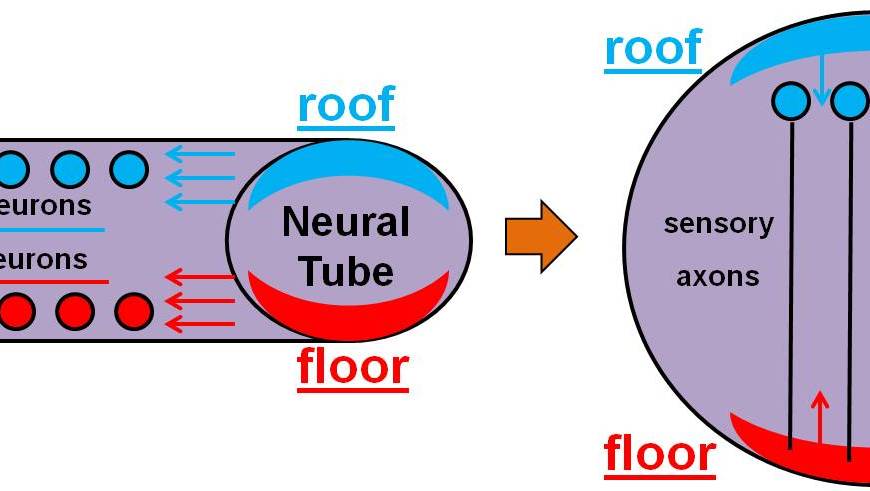
The brain is responsible for our experience of, and acts as the interface between, the self and the outside world. Everything we think, feel, remember and dream is written by a precisely-interconnected community of approximately 100 billion brain cells. Have you ever wondered where the different types of neurons in our brain originate from? Or how these brain cells then find their way to connect with other cells, up to a metre away in our body? These answers can be found in the developing brain, which arises from the microscopic, but miraculous, embryo.
Creation of our brain
Very early in human development, the embryo consists simply of three fundamental cell layers: outer ectoderm (becomes outer-body parts e.g. skin/hair/teeth); middle mesoderm (develops into muscles, bones and blood vessels); and inner endoderm (forms our inner-body compartments e.g. gut/lungs). That’s most of our body covered, but where does our brain come from? Continue reading “Getting connected with our brain”
Share this:


Supporting women working in STEM careers
By Emma Pettengale, Commissioning Editor, Portland Press


The United States Census Bureau says that although women make up nearly half of the working population, they remain underrepresented in science, technology, engineering and maths (STEM) occupations. In the UK, the Women in the STEM workforce (WISE) campaign strives to achieve gender balance in the sector. Recent figures from WISE (Nov 2016) show that while there have been some increases, women still only make up 21% of the Core STEM workforce in the UK. Globally, women make up an average of 28.4% of those employed in scientific research and development according to a recent report. There is a need to encourage and support women in STEM, and the Biochemical Society and Portland Press actively supports female members of the life science community in their goals.
I asked a selection of female scientists from across a range of fields to talk to us about what drew them to science and the female scientists that they most admire. Continue reading “Supporting women working in STEM careers”

 ARCHIVE