Skip to content

ARCHIVE

  • Home
  • Terms of use
  • About
  • Blog Posts
    • Research
    • Journal content
    • Biochemical Society
    • Education & careers
    • Policy
    • Industry
    • Student-focused
    • Science communication & public engagement
    • Diversity
    • Events
    • Historical
  • Biochemical Society main website >

Category: Science communication & public engagement

Events, Research, Science communication & public engagement

Getting connected with our brain

By Dr Shane Hegarty, University College Cork, Ireland

SH
Dr Shane Hegarty (Photo by Tomas Tyner, UCC.)

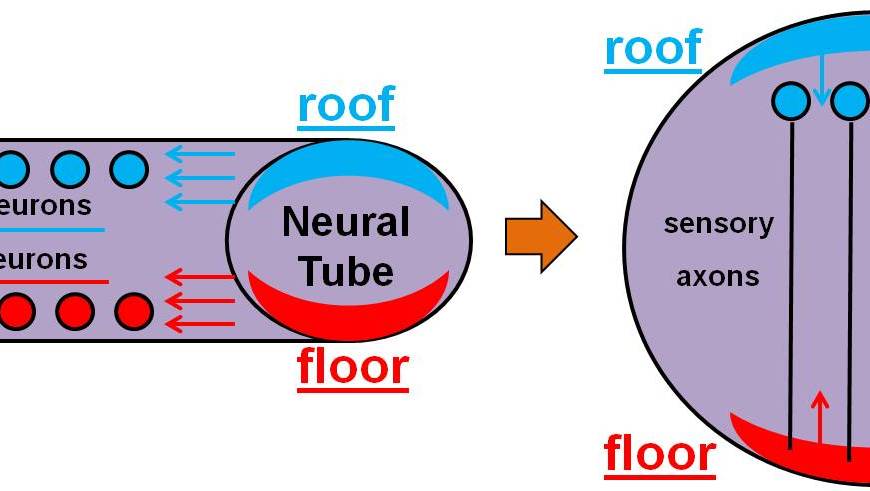
The brain is responsible for our experience of, and acts as the interface between, the self and the outside world. Everything we think, feel, remember and dream is written by a precisely-interconnected community of approximately 100 billion brain cells. Have you ever wondered where the different types of neurons in our brain originate from? Or how these brain cells then find their way to connect with other cells, up to a metre away in our body? These answers can be found in the developing brain, which arises from the microscopic, but miraculous, embryo.

Creation of our brain

Very early in human development, the embryo consists simply of three fundamental cell layers: outer ectoderm (becomes outer-body parts e.g. skin/hair/teeth); middle mesoderm (develops into muscles, bones and blood vessels); and inner endoderm (forms our inner-body compartments e.g. gut/lungs). That’s most of our body covered, but where does our brain come from? Continue reading “Getting connected with our brain”

Share this:

  • Tweet
  • Email a link to a friend (Opens in new window) Email
  • Print (Opens in new window) Print
  • More
  • Share on WhatsApp (Opens in new window) WhatsApp
  • Share on Reddit (Opens in new window) Reddit
Like Loading...
Unknown's avatarBiochemical SocietyMarch 14, 2017May 2, 20172 Comments
Partner organizations, Science communication & public engagement

Let’s talk about stress

By Anastasia Stefanidou, Communications Officer, Biochemical Society

blog-image

According to the UK Health and Safety Executive (HSE), in 2015/2016 stress accounted for 37% of all work-related ill health. It’s time for employers to support their staff and invest in giving people the techniques and guidance on how to cope with stressful situations.

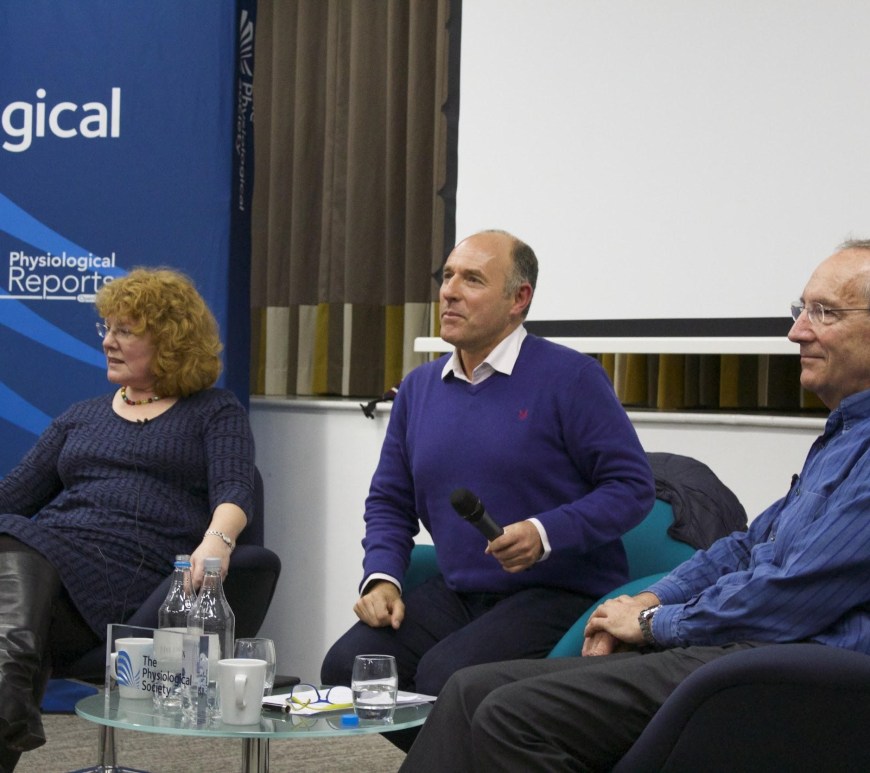
To raise awareness of and encourage discussion around the issue, The Physiological Society held a “Under Pressure: Making sense of stress” panel discussion on Tuesday, 21 February 2017.

The Physiological Society is devoting all of 2017 to ‘Making Sense of Stress’ across all areas – events, outreach, education, policy, and communications – with the general aim of emphasizing the contribution, past and current, of physiology to our understanding of stress. Continue reading “Let’s talk about stress”

Share this:

  • Tweet
  • Email a link to a friend (Opens in new window) Email
  • Print (Opens in new window) Print
  • More
  • Share on WhatsApp (Opens in new window) WhatsApp
  • Share on Reddit (Opens in new window) Reddit
Like Loading...
Unknown's avatarBiochemical SocietyFebruary 28, 2017April 24, 2017Leave a comment
Biochemical Society, Education & careers, Science communication & public engagement

Empowering the adults of the future

By Patricia Bernal, Imperial College London

On a cold winter day in London on January 2017, Native Scientist celebrated a warm science outreach event for children in partnership with the Embassy of Ecuador in London.pb-pic1 The meeting took place in the Ecuadorian Consulate located near King’s Cross St. Pancras in the very heart of the city of London.  The event brought together 25 Ecuadorian pupils and 5 Spanish-speaking scientists from different disciplines.
Scientists used their mother tongue to explain to the children in an engaging and fun way the work they are currently performing in the United Kingdom. The workshop allowed the scientists to improve their communication skills and increase the impact of their research in a welcome environment. Continue reading “Empowering the adults of the future”

Share this:

  • Tweet
  • Email a link to a friend (Opens in new window) Email
  • Print (Opens in new window) Print
  • More
  • Share on WhatsApp (Opens in new window) WhatsApp
  • Share on Reddit (Opens in new window) Reddit
Like Loading...
Unknown's avatarBiochemical SocietyFebruary 24, 2017April 24, 2017Leave a comment
Education & careers, Partner organizations, Science communication & public engagement

Investigating zebrafish with in2scienceUK

By Benjamin Simpson, Shenfield High School, Essex, UK

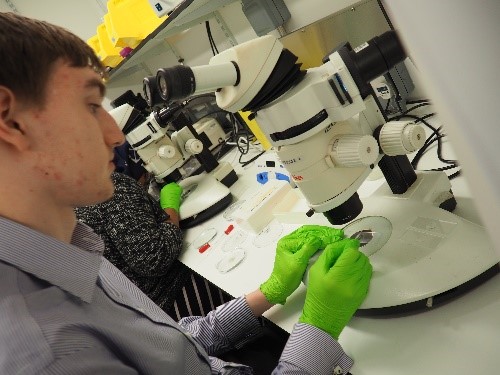
pic3When I arrived at the lab, the first thing I noticed was how casual everything was. Even the principal investigator arrived at about 11am. I expected to find a strict regime of when to arrive, what to do and what to wear. Anna and Nikki were my supervisors in the Attwell lab at University College London. My project involved using zebrafish to investigate the development of myelin (a substance which is wrapped around neurons to increase conductivity). Zebrafish are especially useful because they are transparent allowing us to view the development under a microscope without harming the fish or embryo. On the first day of my placement they were only a few hours post fertilisation and so were still just a bundle of cells on a yolk. I learnt how to maintain the embryos through filtering out the dead ones and changing the water. Continue reading “Investigating zebrafish with in2scienceUK”

Share this:

  • Tweet
  • Email a link to a friend (Opens in new window) Email
  • Print (Opens in new window) Print
  • More
  • Share on WhatsApp (Opens in new window) WhatsApp
  • Share on Reddit (Opens in new window) Reddit
Like Loading...
Unknown's avatarBiochemical SocietyJanuary 31, 2017April 24, 20171 Comment

Posts navigation

Older posts
Newer posts

This blog is now an archive site, for more up to date content please visit us over at our main Biochemical Society website >

Follow @The_Biochemist

My Tweets

The Biochemist magazine

The Biochemist is the essential read for anyone with an interest in the fundamental processes of molecular biology, health and disease. Published bi-monthly by Portland Press, the publishing arm of the Biochemical Society, The Biochemist is a great way to keep up with news and views on issues of relevance to the molecular bioscience community.


The Biochemist Blog © Biochemical Society 2017. All rights reserved. See also Terms of Use.
Website Built with WordPress.com.
  • Subscribe Subscribed
    • ARCHIVE
    • Join 535 other subscribers
    • Already have a WordPress.com account? Log in now.
    • ARCHIVE
    • Subscribe Subscribed
    • Sign up
    • Log in
    • Report this content
    • View site in Reader
    • Manage subscriptions
    • Collapse this bar
 

Loading Comments...
 

    %d